
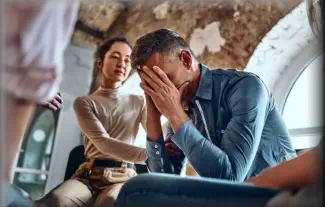
There
are
many
reasons
why
someone
develops
an
Alcohol
Use
Disorder (AUD).
For some, it may be due to leading a bad lifestyle or a social
routine. Like Mary in the video opposite, she would follow a
daily routine. She was drinking every night on her way home
from work, not because she wanted to, but because this is what
she always did. Her life revolved around the need to be with
others and to be seen to be sociable.
Others may have experienced a traumatic event in their lives,
for which alcohol is used as a form of self-medication. I classify many of these people as being “Victims of Circumstance”. This is where a person
can become emotionally damaged due to the actions of others. A rape, or being in a horrendous car crash. Witnessing a murder. The loss of a
loved one. We are all susceptible to these emotional situations that life can throw at us. All of which are none of our own making.
There are many other causes as to why a person may abuse alcohol.
My
history
of
alcohol
abuse
was
due
to
my
being
an
undiagnosed
dyslexic.
A
child
who
struggles
with
learning
difficulties,
maybe
ridiculed
and
laughed
at
by
other
children.
They
can
often
be
made
to
feel
different
and
subsequently
be
picked
on
and
bullied.
They
can
feel
ostracised
and
made
to
feel
inadequate.
Teachers
can
become
frustrated
by
the
child's
inability
to
learn.
In
the
past,
they
would
regard
a
child
as
being
a
dunce,
a slow learner, an idiot, thick or just plain stupid.
Home
life
too
could
also
be
traumatic,
as
a
child
may
be
made
to
feel
a
failure,
inadequate,
or
a
disappointment.
You're
thick,
you're
stupid,
you're useless, you’re an embarrassment to the family name.
A
child
may
well
go
on
to
develop
psychological
issues
in
adult
life.
All
this
conditioning
can
be
seen
as
a
form
of
mental
abuse.
Feelings
of
guilt,
failure,
being
subnormal,
and
dejection
only
fuel
anxiety
and
depression.
In
addition
to
this,
some
dyslexic
people
may
go
on
to
develop
ADHD
(Attention-Deficit/Hyperactivity
Disorder),
which
in
itself
is
a
mental
health
disorder.
(It
should
be
noted
that
Dyslexia
isn’t
a
mental
health
condition, but a learning disability.)
Over
time,
a
person
with
dyslexia
may
find
it
hard
to
mix
and
socialise
with
others.
They
feel
inadequate
and
fear
others
will
wrongly
acknowledge
their
condition.
Dyslexic
people
are
often
seen
as
being
lazy,
unintelligent,
and
‘faking
it’
for
attention.
They
can
become
stigmatised. People with dyslexia may experience emotional distress, including aggression and harbour suicidal thoughts.
When
I
joined
the
RAF
at
the
age
of
17
years
of
age.
I
found
that
alcohol
would
allow
me
to
lose
those
inhibitions
and
enable
me
to
socialise
with
others.
It
helped
me
gain
confidence
and
became
my
coping
mechanism
for
life.
The
worst
life
lesson
I
ever
learnt
while
in
the
RAF
was
that
the
best
cure
for
a
hangover
was
“The
Hair
of
the
Dog
that
Bit
You”.
This
led
me
down
the
“Bender”
pathway
(A
“Bender”
involves
continuous
drinking for two or more days).
Ask
any
person
with
an
addiction
problem,
whether
it
be
drugs
or
alcohol,
and
they’ll
tell
you
that
alcohol
is
the
hardest
form
of
addiction
to
deal
with.
But
you
are
NOT
powerless;
it
just
takes
support
and
a
willingness
to
succeed.
It
has
nothing
to
do
with
religion;
it’s
about
willpower
and
having
that
determination. Having said that, not all people who have an alcohol problem have an addiction issue.
There
are
many
local
support
groups
out
there,
and
some
people
have
become
put
off
by
the
“Alcoholics
Anonymous”
approach.
But,
having
said
that,
I
fully
understand
that
if
a
person
finds
this
approach
helpful,
then
that
can
only
be
a
good
thing,
as
a
lot
of
people
have
found
a
life
of
total
sobriety
using
this
method
of
recovery.
If,
on
the
other
hand,
you
are
put
off
by
this
spiritualist
approach,
don’t
give
up;
there
are
other
options available to you.
Another
thing
I
want
to
try
and
get
across
is
the
definition
of
two
widely
used
words
these
days
called
“BingDrinking”,
and
an
alcohol
“Bender”.
Sometimes
the
term
"binge
drinking"
is
confused
with
"bender".
Some
people
believe
that
warnings
against
binge
drinking
are
warnings
against going on multiple-day bouts of intoxication, but that is not
what binge drinking is all about.
Binge
drinking
is
drinking
five
or
more
drinks
in
any
one
drinking
session
for
both
men,
and
women
alike,
It’s
the
Friday
night
culture
mindset
thing,
that
takes
place
in
nearly
every
town
and
city
in
the
country,
“
I’m
going
out
tonight
and
I’m
going
to
get
totally
off
my
face”
,
or
“I’m
getting
completely
bladdered
tonight”
.
Harmful
drinking
can
occur
long
before
it
reaches
the
level
of
a
bender.
While
going
on
a
bender
might
be
considered self-destructive behaviour, simply drinking five beers or a bottle of wine in one day is considered hazardous drinking.
An
alcohol
bender
is
a
multiple-day
drinking
spree
during
which
the
person
does
not
eat
and
gets
very
little
sleep.
If
you're
on
a
bender,
you
might
pass
out
for
a
short
time,
wake
up
and
start
drinking
again.
A
bender
does
not
refer
to
one
evening
of
intoxication.
It
refers
to
a
drinking
spree that is extended over at least two or more days.
The Liver Life Project
Understanding
The Alcohol Mindset.
Many
people
who
go
on
to
develop
a
serious
liver
condition
through
alcohol
abuse
may
have
only
two
options
left.
In
the
cold
light
of
day,
it
comes
down
to
being
a
choice
between
life
or
death.
Total
abstinence
from
alcohol
may
be
the
only
real-life
option.
This
is
a
make-or-break
wake-up call.
This
will
often
come
as
a
complete
shock,
as
many
just
can’t
imagine
a
life
without
alcohol.
Surprisingly
enough,
the
alcohol
mindset
just
cannot
get
their
head
around
this
and,
some
people
still
prefer
the
latter
option
even
though
they
realise
their
life
will
be
over.
“At
least
I’ll
die
happy”
Sadly, this selfish option never makes them feel happy, and death due to liver failure is never going to be a comfortable exit.
There
needs
to
be
that
willingness
to
accept,
fight
and
beat
this.
This
is
where
family
and
the
support
of
others
are
so
important.
“This
is
the
problem. Now, what are
WE
going to do to make things right?”
This
shows
a
person
that
they
are
not
alone
and
that
they
can
beat
this.
It
shows
that
others,
too,
are
willing
to
share
in
this
journey.
We
can
beat this.
It’s
a
time
for
sorting
out
your
life
and
seeing
who
those
friends
really
are.
The
one
who
says,
“Go
on,
have
a
drink,
one’s
not
going
to
kill
you.
Have
a
proper
drink”.
This
person
is
not
a
real
friend
as
they
don’t
have
your
interests
at
heart.
“If
I
so
much
as
see
you
with
an
alcoholic
drink
in
your
hand,
I’ll
kill
you
myself”.
This
is
the
real
friend,
the
one
who
has
your
back
and
wants
to
see
you
get
better
and
beat
this.
It
can
be
done;
it
takes a willingness to want to overcome this and take control of your life again.
Alcohol-Related Liver Disease (ArLD) - Victims of Circumstance
For many years, I have been offering help, advice and support to people over on a highly respected “HealthUnlocked” website: https://healthunlocked.com/ Over time, it has brought home to me the many reasons why a person goes on to develop an alcohol-related medical condition in the first place. It is reckoned that some 84% of people who go on to develop a serious liver condition drink alcohol because they choose to. The remaining 16% are those who now have an alcohol addiction; they are now drinking because they have to. So, Alcohol abuse falls into two categories. Those who have an alcohol problem, and those who have an alcohol addiction. Sadly, many local alcohol support services don’t differentiate between the two categories. They find it easier to just label everyone the same and call them “Alcoholics”. This just adds to stigmatising and alienating people. For many, this title becomes an invisible badge of shame. Where to Start To start, I often like to use what I refer to as the “Cause and Effect” analogy. For many people who go on to develop a drinking problem, the reason behind their need to drink can become lost over time. Most often or not, there is a deep-rooted past issue in their life that makes them want to feel better about themselves. To help blank out a traumatic experience, or to help someone gain confidence from within, even to try and help deal with feelings of guilt, despair, and loneliness. I often refer to the following two cases as examples. These are two true stories of people who posted up asking for help on a well-respected, online liver support group site. Obviously, I’ll protect the person's anonymity. This first case involves a lady who was in her late 30s, who now has a cirrhotic liver through ArLD. It took a few weeks of exchanging messages to gain this lady's trust. She finally told me that some 11 years previously, she had gone out on a Friday night with some friends and had been raped on the way home. For 11 years, this lady had never told anyone, not even her GP or other members of her family. She had blamed herself and would seek solace in alcohol. Alcohol became her coping mechanism to help her blank out the traumatic event and also to help her cope with the guilt and shame that she felt. Had this poor lady gotten the help she needed at the time, she’d most likely have a perfectly healthy liver today. The second case refers to a young lady in her early 20s who, once again, used alcohol as a form of self-medication and a coping mechanism. She, too, now had liver cirrhosis.Her story goes back to when she was just 14 years old. She was witnessing her father and mother having a heated row. She remembers crying and wanting to try and stop them, but was too scared. She witnessed her father murder her mother. That evening, she was robbed of the love and affection of not only her mother but also that of her father, who was arrested and given a life sentence for his wife’s murder. This young lady ended up in the care system, where she spent the rest of her teens and her early 20s blaming herself for not having the courage to stand up and protect her mother. For her, alcohol abuse became a daily need to help blank out the traumatic experience and the guilt she felt for not helping her mother and standing up to her father. No child should have to feel that. Cause and Effect “School of Rock Bottom with Oliver Mason” There is a YouTube podcast channel featuring Oliver Mason. Here, the School of Rock Bottom features many podcasts from people who have gone on to develop a drug or alcohol problem; these brave people can now talk and share their experiences by confronting their demons and finding that inner peace. When you hear these two examples from both Serena and Madeleine, it’s easy to understand why these ladies ended up going down that dark road to seek solace and escape from this often cruel world. There are plenty of other stories like this on this channel, while others talk of their experiences with ADHD, Dyslexia and other health issues and experiences. These can be found here: https://www.youtube.com/@OliverMason1/videos Cause and Effect Both of these ladies have experienced some terrible traumatic events in their lives, none of which was of their own making. These ladies became victims of other people's actions, all through no fault of their own. Many people have difficulty mentally processing the cruel actions of others. This then leads the victim to seek their own form of self-medication to make them feel better and emotionally stronger. In both these examples, the original actions of others become the “Cause”. The use of alcohol as a form of self-medication becomes the “Effect”. If a person could have been given emotional help and support at the time, i.e. treating the “cause”, then the “effect” would have become redundant and not needed. Behind every person who develops a problem with alcohol, there is a story waiting to be told. That man, drunk on a park bench, we just see a broken person and look upon them with disgust and disdain. What we don’t see is a man who has completed two tours in Afghanistan and seen his best friend blown to bits. For a while now, I have been involved with some liver medical students. Here I talk about my liver journey and my liver transplant experience, all from a personal perspective. I always conclude with the following advice. “Always try and treat the patient and not just treat the physical condition”. Once again, the “Effect” is the liver damage and the “Cause” is the alcohol. The need to look beyond the cause is so important. Many young people from disadvantaged families tend to suffer the most. Those childhood experiences shape the way they’ll become in adulthood. Those early life skills and teachings that are passed down from previous generations are so important in shaping the person of the future. Those young children who end up in the care system, all through no fault of their own, can already become damaged and mentally scarred. They can feel unloved, rejected and unwanted. They may feel a failure and lack ambition, and have little sense of purpose or direction in life. Some of these young people may be fostered and find love and support from an adopted family, while others may be unsuitable and remain within the care home environment. When the latter reaches the age of adulthood, they are on their own. Many lack any basic life skills. They may feel lost and have no ambition or drive. Many just want to blank out the day and lock themselves away inside an invisible protective bubble away from the outside world. BBC Panorama 25 November 2024 “Binge Drinking and Me” Alcohol-related deaths from liver disease among women under 40 have risen sharply over the last decade – but why? Thirty-two-year-old BBC journalist Hazel Martin goes on a personal journey to find the answer. She is one of a growing number of young women who have experienced alcohol-related liver damage, despite not regarding herself as being dependent on alcohol. Talking to doctors, patients and experts on the drinks industry, Hazel discovers that a key cause is Britain’s binge-drinking culture and explores what can be done about it.
A missed opportunity
One of the problems associated with having Liver Disease is the lack of understanding within the population that the liver doesn't have any pain
receptors.
As we all get older, we learn from a young age that if something is damaged or infected, it will hurt and need medical treatment or advice.
A toothache, a headache, a sprained ankle or a broken leg, etc. All these conditions are recognised due to the pain signals our brains receive.
Many people believe that if their liver were to become damaged, they would receive some form of pain .
Many times I’ve been out with the Liver UK “Love Your Liver” roadshow, trying to entice people to come and have a free fibroscan of
their liver, only to get the same response, “Oh, it’s okay, my liver’s fine”. Many people expect to feel some form of pain or discomfort if their liver is
damaged, but because they don’t feel anything unusual, their liver must be fine.
This message is repeatedly being missed, and people are still unaware that their liver doesn’t have any pain receptors. I often explain that if their
liver did, we’d all be doubled up in constant agony as the liver processes all those toxic chemicals and the buildup of fatty acids in the liver. “Come
and have your liver checked, and if nothing untoward is found, then you’ll at least have peace of mind”. This normally does the trick.
Some national public awareness campaigns do exist to educate people on liver health, early diagnosis, and the prevention of liver disease is vital,
simply knowing that the liver doesn’t feel pain is so important for people to know.